
In this article
A busy holiday kitchen can put a lot through the sink in a short time: cooking grease, food scraps, dishwater, and the occasional accidental spoonful of leftovers. Keep grease and scraps out of the drain, spread out cleanup, and pay attention if the sink starts draining slowly. Those simple habits can reduce the chance that dinner ends with a backed-up sink.
Whether you are hosting in Boise, Meridian, Nampa, or elsewhere in the Treasure Valley, the same practical rule applies: a garbage disposal is not a trash can, and a drain is not a safe place for leftover cooking oil. Here is how to prepare, clean up, and respond if water stops moving.
Set up the kitchen before guests arrive
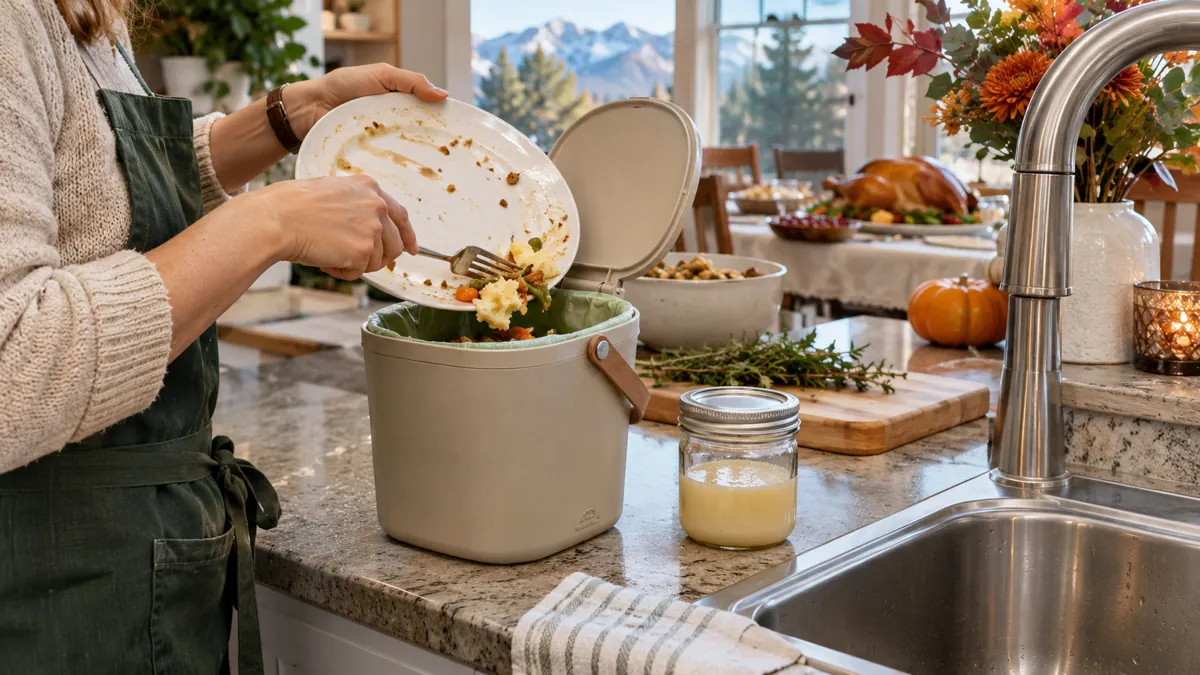
Put a trash can and, if you use one, a food-scrap container near the sink. Place a sink strainer over the drain so it catches scraps before they enter the plumbing. Keep an empty, heat-safe container nearby for used grease, with a lid available once the grease has cooled. Make sure everyone helping with dishes knows where the containers are.
If the sink is already draining slowly, address it before a large meal. A slow drain may have accumulated material in the trap or farther down the line; it is not proof of a particular cause. Check for leaks under the sink and pay attention to gurgling or odors. If slow drainage keeps returning, arrange an inspection instead of relying on a last-minute fix.
Keep fats, oils, and grease out of the sink
Turkey drippings, bacon fat, butter, gravy, cooking oil, and creamy sauces can all introduce grease into plumbing. The Environmental Protection Agency's guide to fats, oils, and grease explains that grease can collect inside pipes and contribute to blockages. Running the garbage disposal does not keep grease out of the plumbing.
Let grease cool before handling it, then transfer it to a suitable container. Once cooled and sealed, follow your local trash or recycling provider's instructions for disposal. Wipe greasy pans and plates with a paper towel and put the towel in the trash before washing. Large amounts of fryer oil may need a local collection or recycling option; check with your provider instead of putting it down a sink, toilet, or outdoor drain.
Hot water and dish soap are useful for washing dishes, but they do not make pouring grease down the drain a good disposal method. The grease still enters the plumbing. Keeping it out in the first place is simpler than guessing where it might collect later.
Scrape plates before rinsing
Scrape leftovers into the trash or an appropriate food-scrap container before dishes go into the sink. Coffee grounds, eggshells, bones, fibrous vegetable peels, and starchy leftovers are better kept out of the disposal. A strainer catches the smaller pieces that remain after scraping; empty it regularly instead of pushing the contents through.
A disposal's instructions vary by model, so check the manufacturer's guidance for what it can handle and how to run water while it operates. Feed only small amounts of permitted scraps, and keep hands and utensils away from the opening. Never reach inside to clear a jam. If the unit hums, stops, or leaks, switch it off and follow its safety instructions. Our garbage disposal troubleshooting guide covers common symptoms and when to call for help.
Homes with septic systems need particular care with food waste. The EPA's septic maintenance guidance recommends limiting garbage-disposal use because extra food waste adds solids to the tank. Your system's maintenance provider can give advice suited to your setup.
Spread out the cleanup
It is tempting to run the dishwasher, fill the sink, operate the disposal, and start laundry at the same time. A healthy system should handle normal household use, but a developing restriction may become obvious when several fixtures drain together. If you already have a slow kitchen sink, reduce use and investigate rather than treating extra water as a way to force a clog through.
Before starting the dishwasher, confirm the sink is draining normally. If water backs into the sink when the dishwasher drains, stop the cycle if it is safe to do so and avoid using the affected fixtures until the cause is identified. The dishwasher drain connection and the sink line may need attention; the symptom alone cannot tell you which part is blocked.
Know the early signs of a drain problem
Watch for these changes during preparation and cleanup:
One slow sink can have a local obstruction; several affected fixtures may point to a problem farther along the drain system. Neither pattern proves a diagnosis. Note which fixtures are involved and whether the problem happens when the dishwasher runs. That information gives a plumber a useful starting point. For more background, read our guide to common causes of clogged drains.
What to do if the sink backs up
Stop running water into the affected sink and pause the dishwasher. Move food and clean dishes away from the area, and keep children and pets away from any dirty water. Do not continue testing the sink by filling it repeatedly; more water can make a backup overflow.
Avoid mixing drain-cleaning chemicals or adding them to standing water. A chemical product can create a burn hazard and make later work more difficult. If you have already used one, tell the plumber what it was before service begins. Do not dismantle a drain or use equipment you are uncomfortable handling.
If sewage appears, multiple fixtures back up, or water is approaching electrical outlets, keep away from the affected area and seek appropriate help promptly. Do not step into standing water near electrical equipment. Treat wastewater as potentially contaminated and avoid contact.
When to call a plumber
Call when a clog persists, returns soon after clearing, affects multiple fixtures, or causes a leak under the sink. Mountain Time Plumbing provides drain cleaning and clogged drain repair. You can contact our team and describe the symptoms, including any chemical cleaner used.
A few minutes of preparation can make holiday cleanup easier: set out the strainer, give grease its own container, scrape plates, and pay attention to a sink that has already started slowing down. Those habits are useful long after the guests leave.
Need Plumbing Help in the Treasure Valley?
Ask about same-day availability and get upfront pricing across Boise, Meridian, Eagle, Nampa, and beyond.