
In this article
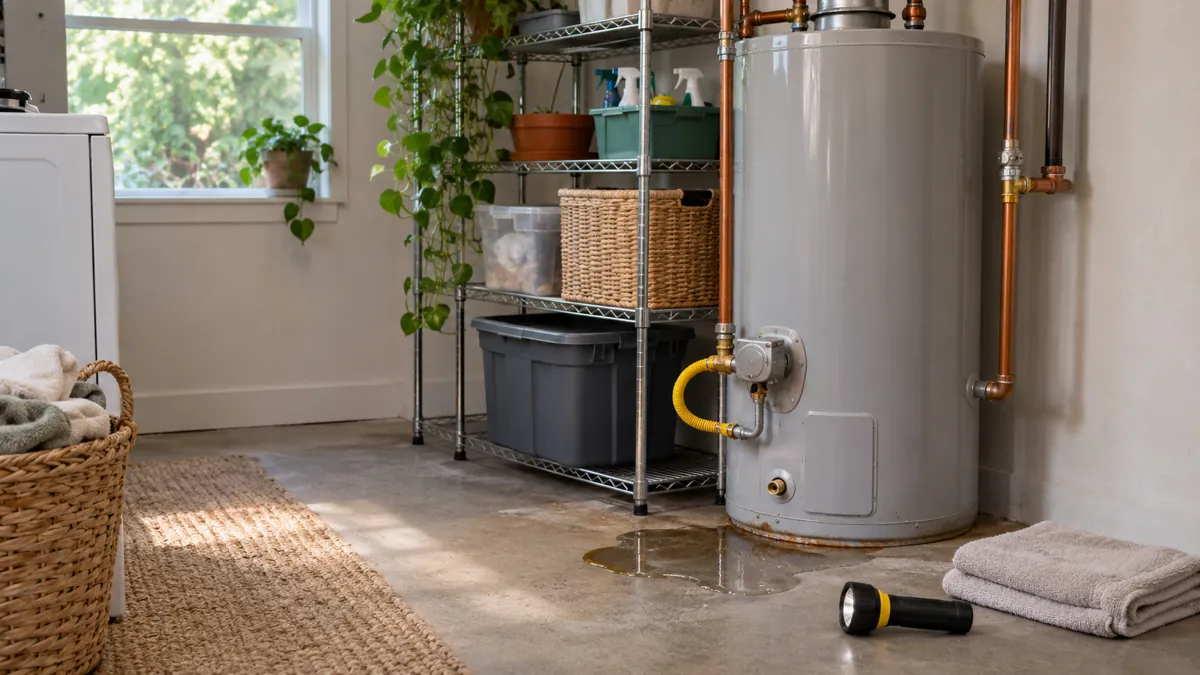
If you find water around your water heater, first keep people away from electrical equipment and hot water. If you can safely reach it, close the heater's cold-water supply valve and shut down the heater according to its manufacturer's instructions. If the water keeps flowing, use the home's main shutoff if you can reach and operate it safely. Then contact a plumber to identify the source.
A puddle does not automatically mean the tank needs replacement. Water may come from a connection, a valve, a nearby appliance, condensation, or the tank itself. The location, the amount of water, and any safety hazards determine the next step. These instructions are for common residential water heaters; follow your model's manual if it differs.
Start with safety
Do not step into standing water near an electrical panel, outlet, appliance, or the heater's electrical components. Do not touch a wet switch or breaker. Leave the area and contact the appropriate emergency service or a qualified electrician if the electrical supply cannot be reached safely.
If you smell gas or suspect a gas leak, leave the building immediately and contact your gas utility or emergency services from a safe location. Do not operate switches, appliances, or phones inside. Do not try to diagnose a gas leak yourself.
Water from a heater can be hot enough to cause burns. Keep children and pets away, and do not open the drain valve or a relief valve to investigate. If the leak is substantial or you cannot safely access the shutoffs, leave the equipment alone and call for help.
Turn off the water if you can do so safely
Many tank-style water heaters have a shutoff on the cold-water pipe entering the top of the heater. If you can clearly identify the valve and reach it safely, close it. A lever handle commonly closes when turned perpendicular to the pipe; a round handle commonly closes clockwise. Valve designs differ, so do not force a stuck valve or assume a lever's position if the markings or plumbing are unclear.
If water continues to flow, or you cannot locate the heater's valve, shut off the home's main water supply if you know where it is and can reach it safely. Doing this interrupts water to the rest of the house too. If the main valve will not turn, do not apply excessive force; contact a plumber or your water provider for guidance.
Shutting off the supply can limit additional water entering the heater, but it does not empty a full tank or guarantee that an existing leak will stop immediately. Keep clear of hot water and arrange service. The Oregon emergency management water-heater guidance includes illustrations of common supply connections; your equipment may look different.
Shut down the heater using its instructions
For an electric heater, turn off its clearly labeled circuit breaker only if the panel is dry and safely accessible. Never enter water to reach it. For a gas heater, follow the manufacturer's shutdown instructions for the appliance; do not touch gas controls if you suspect a gas leak. If you are unsure which controls to use, leave them alone and ask a qualified professional.
Do not restart an isolated electric heater until a qualified person confirms the tank is properly filled and safe to operate. Heating an empty or partially empty tank can damage equipment. Model-specific instructions matter, particularly for gas controls, tankless units, and combination systems.
Look for the source without taking anything apart
Once the area is safe, use a flashlight to observe where moisture first appears. A photo can help document the problem. Do not remove covers, tighten gas fittings, disconnect pipes, or put a hand near hot or electrical parts.
Manufacturer troubleshooting guidance notes that moisture around a heater can have several sources and recommends checking them before deciding the tank must be replaced. See this water-heater manufacturer service guide. A professional can inspect the unit without guessing from the puddle alone.
Can a leaking water heater be repaired?
Sometimes the issue is a fitting, valve, or connected pipe that can be repaired or replaced. A leaking tank itself often means replacing the heater. Age, condition, the actual source, and the manufacturer's guidance all matter. Ask the plumber to show you where the water is coming from and explain the proposed work before deciding.
If you are comparing options, our water heater replacement signs guide explains other symptoms to consider. Our tankless versus tank comparison covers questions to discuss if replacement makes sense. Neither article substitutes for inspecting the leaking equipment.
When should you call right away?
Contact a plumber promptly if water is actively flowing, the shutoff will not close, a relief discharge is releasing water, or the leak is spreading into floors or walls. Treat gas odors and electrical hazards as emergencies and contact the appropriate utility or emergency service from a safe location.
For a small damp spot, do not ignore it simply because the heater still produces hot water. Dry the surrounding floor only when it is safe, note whether moisture returns, and schedule an inspection. If you rent, notify the property owner or manager as well.
Mountain Time Plumbing offers water heater repair and water heater installation in the Treasure Valley. Contact the team with the heater type, where you see water, whether it is still flowing, and any steps you have already taken. That information can help the technician prepare for the visit.
Need Plumbing Help in the Treasure Valley?
Ask about same-day availability and get upfront pricing across Boise, Meridian, Eagle, Nampa, and beyond.